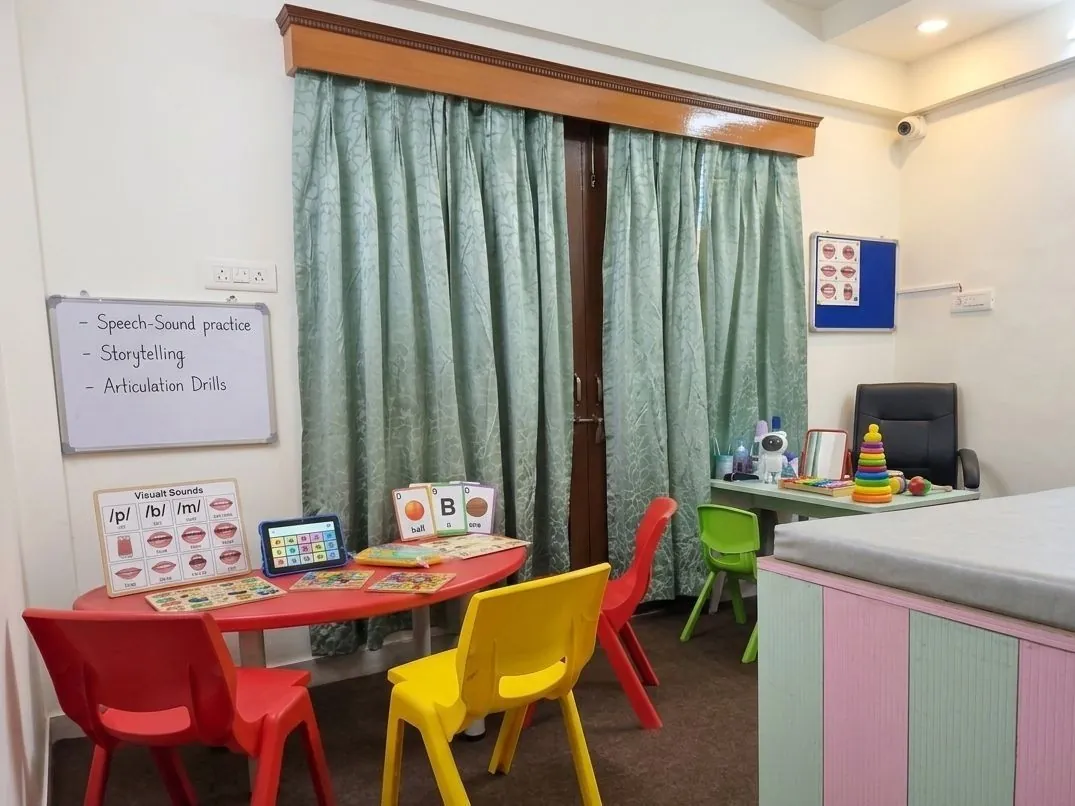
Stammering, also called stuttering, often starts between two and five years, when language is growing quickly. You may hear repeated sounds or words, stretched sounds, or moments when your child gets stuck.
It is common, it is not caused by parenting, and there is a lot parents can do to help.
What stammering can look like
- Repeating parts of words ("b-b-ball") or whole words ("I-I-I want")
- Stretching sounds ("mmmmummy")
- Getting stuck with no sound coming out
- Tension, blinking or other movements while trying to speak
- Avoiding words or not wanting to talk
How to respond at home
- Slow down your own speech a little and keep it relaxed. Children often follow your pace.
- Give your child time to finish. Do not finish words for them.
- Avoid saying "slow down", "take a breath" or "say it again". It adds pressure.
- Keep natural eye contact and show you are listening to what they say.
- Ask fewer quick questions, and leave pauses in conversation.
- Have a few minutes of calm, one-to-one time each day, without distractions.
- If your child seems upset, say something kind, like "That word was hard. You did well."
When to get an assessment
- Stammering has continued for more than about six months
- You see tension, struggle or blocks
- Your child is upset, embarrassed or avoids speaking
- There is a family history of stammering that continued into adulthood
- Stammering started after about age 3½, or you are simply worried
Many young children stop stammering on their own, but some do not, and it is hard to predict which. An early assessment means you get the right advice at the right time.
Help at SPOT
Our speech-language therapists assess fluency, guide parents, and offer age-appropriate stuttering therapy for children, teenagers and adults.
This article is for general awareness and is not a diagnosis. Please speak to a qualified professional about your child. Clinically reviewed by Monika Pilania, BASLP (AIISH, Mysore), Clinical Director